Composite bonding vs veneers
Quick answer
What is the difference between composite bonding and veneers?
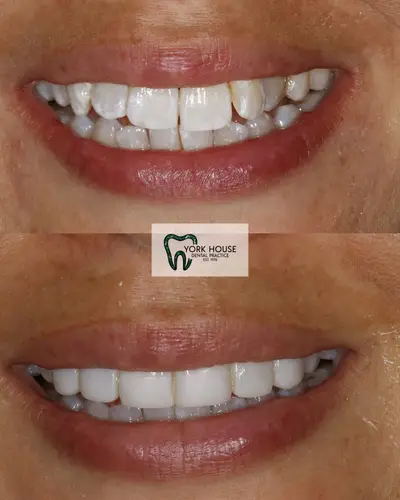
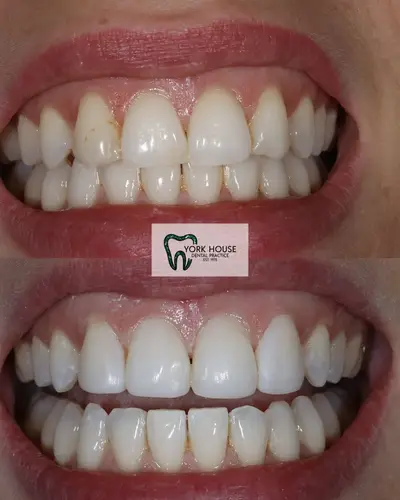
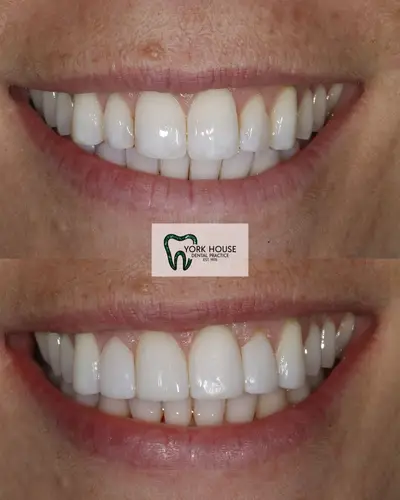
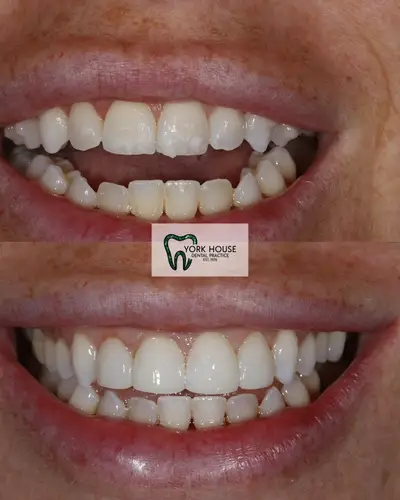
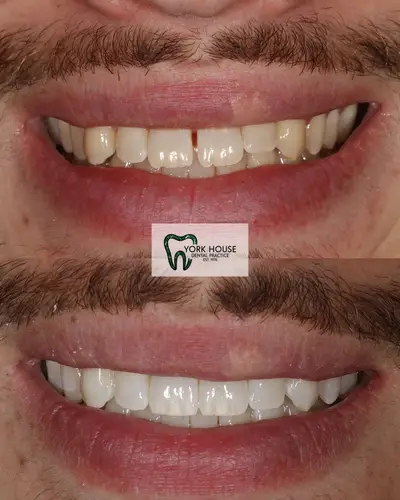
Composite bonding is tooth-coloured resin shaped on the tooth in one visit, from £200 per tooth at York House Dental Practice in West Byfleet.
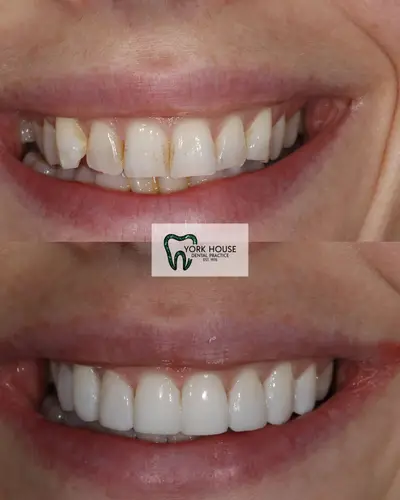
Porcelain veneers are lab-made ceramic shells, from £850 per tooth, usually over two or three appointments. Bonding is more conservative and cheaper; porcelain is typically more stain-resistant and lasts longer.
| Composite bonding | Porcelain veneers | |
|---|---|---|
| Cost per tooth | From £200 | From £850 |
| Appointments | Usually one visit | Two or three visits |
| Tooth preparation | Little to none — resin added to the tooth | A thin layer of enamel removed |
| Stain resistance | Can pick up stain over time; polishable | Highly stain-resistant porcelain |
| Typical lifespan | Several years; refreshable in one visit | Commonly 10 to 15 years or longer |
| Best for | Chips, small gaps, edge wear | Colour, shape and durability priorities |
What you need to know
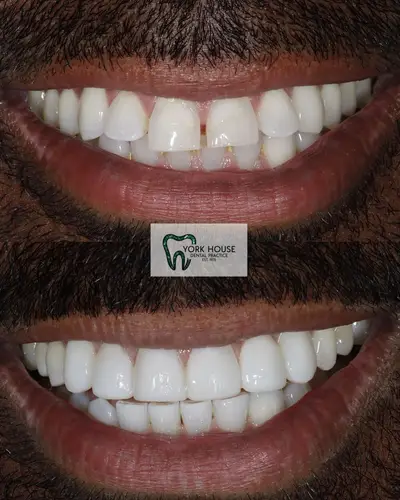
Choose bonding for chips, small gaps and edge wear when you want a reversible-feeling, same-day change. Choose veneers when colour, shape and durability matter more, and you accept a small amount of enamel preparation.
Whitening should happen before either, because neither resin nor porcelain bleaches like natural enamel. We match the material to the shade you actually want to keep.
Neither fixes gum disease or a bite that needs orthodontics first. An honest plan might be Invisalign, then bonding — not a row of veneers on crowded teeth. See bonding, veneers and smile makeovers.
Care at York House Dental Practice
Welcoming new patients, families and emergency appointments from West Byfleet, Woking, Weybridge, and across Surrey.
Last reviewed: by Dr Kaveet Patel, Principal Dentist